
The mental health crisis among clinicians extends far beyond burnout. Nurses and other frontline providers are struggling with anxiety, depression, post-traumatic stress disorder, and even suicidal thoughts at rates significantly higher than general population. This makes it clear that mental health in healthcare requires urgent attention.
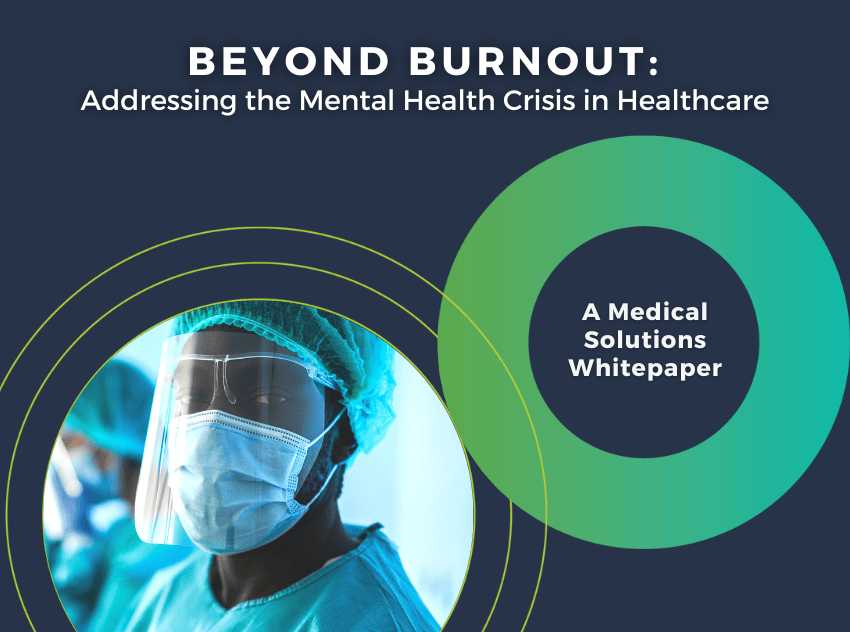
Free Resource: For deeper insights, download our free whitepaper, Beyond Burnout: Addressing the Mental Health Crisis in Healthcare. It explores the severity of the crisis, its impact on healthcare staffing, and the steps leaders can take to build a more resilient workforce.
The Scope of the Crisis: Caregivers are Suffering
The research is sobering:
- More than 70% of healthcare workers in the U.S. report symptoms of anxiety and depression.
- 15% have experienced recent thoughts of suicide or self-harm.
- 38% have symptoms of post-traumatic stress disorder.
Younger nurses report even higher levels of stress, frustration, and exhaustion compared to older colleagues. Many describe themselves as not emotionally healthy, revealing that healthcare workers’ mental health is suffering across all career stages.
A Shortage Deepened by Mental Health Strain
The mental health crisis doesn’t only affect individuals; it also worsens the healthcare staffing shortage. Planned and unexpected retirements are accelerating, while surveys from this whitepaper show many nurses are considering leaving the profession altogether due to stress and trauma.
Without interventions, this cycle threatens both patient care and the stability of the workforce. As more staff leave, the burden on remaining clinicians grows heavier, creating further strain on healthcare staffing professionals who are trying to fill critical roles.
Healthcare leaders can help break this cycle by partnering with staffing providers who use float-pool technology and real-time deployment tools. These solutions allow hospitals to redeploy skilled clinicians quickly, balance workloads, and ease pressure on permanent staff while maintaining quality patient care.

Breaking the “I’m Fine” Culture
One barrier to addressing mental health in healthcare is the “I’m fine” culture. Clinicians often minimize their struggles and continue caring for patients without acknowledging their own needs. Over time, this contributes to compassion fatigue and moral injury, making it even harder for providers to sustain their well-being.
Healthcare leaders have an opportunity to shift this culture by normalizing conversations about emotional wellness, making resources easy to access, and reminding staff that seeking support is not a sign of weakness.
Building a Resilient Workforce
The whitepaper highlights several ways to create a more emotionally healthy workplace:
- Mentorship for younger nurses: Support from experienced colleagues can improve retention and strengthen patient care.
- Recovery resources: Providing accessible, centralized tools for staff following traumatic events is critical for both immediate and long-term recovery.
- Strategic staffing: Leveraging contingent labor, including travel nurses, helps reduce workload for permanent staff and ensures patients continue receiving quality care.
When organizations prioritize healthcare workers’ mental health alongside compensation and benefits, they build resilience into their workforce.
Why Action is Urgent
The pandemic revealed the depth of emotional trauma experienced by clinicians. Without systemic change, staff will continue to leave the profession, worsening shortages and straining patient care. But with intentional strategies, addressing culture, providing mentorship, and offering comprehensive resources, health systems can care for their caregivers.
Learn More
For a closer look at the data and solutions, download the free Medical Solutions whitepaper: Beyond Burnout: Addressing the Mental Health Crisis in Healthcare.
If you’re exploring ways to strengthen your workforce through both support strategies and flexible healthcare workforce solutions, Medical Solutions can help. Start a conversation today to discover how our partnership can help support your caregivers.